
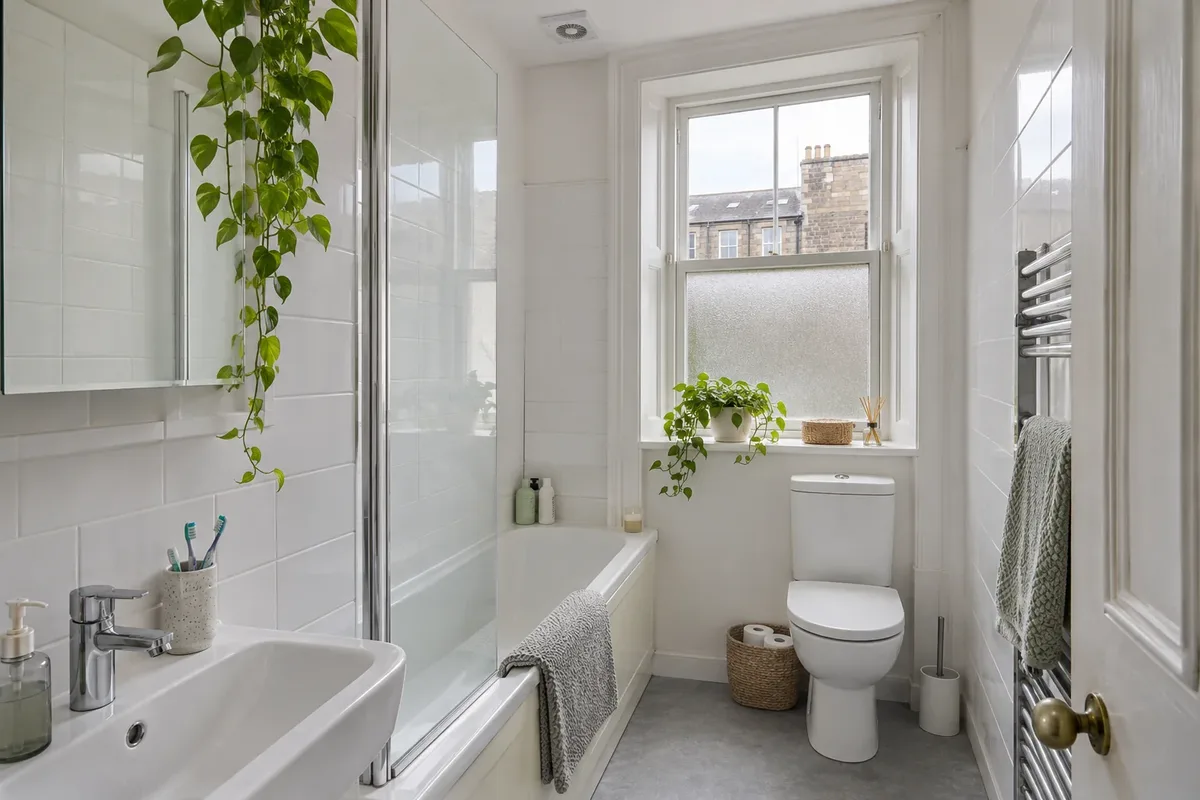
Why Does a Tenement Bathroom Get So Much Condensation?
A shower or bath puts a lot of moisture into the air. When that warm air meets a cold surface, such as an outside wall, a window or a mirror, the moisture turns back into water. Solid stone walls, single glazing and a bathroom that is not heated all day make the surfaces colder, so the water forms more easily.
The Scottish Government says some condensation is normal, but there are steps you can take to reduce it. You can read its guidance in the steps to reduce moisture. It is written for tenants, but the advice applies to any household.
What Can I Do Today, for Free?
The Scottish Government guidance suggests the following steps. They cost nothing, and they help whether you rent or own:
- Keep air bricks and window vents clear.
- Open a window and use the extractor fan, especially when bathing.
- Leave the extractor fan running for about 15 minutes afterwards.
- Leave a gap between furniture and walls so the air can move.
- Wipe walls, windows and mirrors with a cloth or towel after showering.
- Avoid drying clothes on a radiator. Use a rack near a slightly open window.
They are simple, but they work together. Wiping the glass and the walls takes away the water before it can sit.
Is My Extractor Fan Doing Its Job?
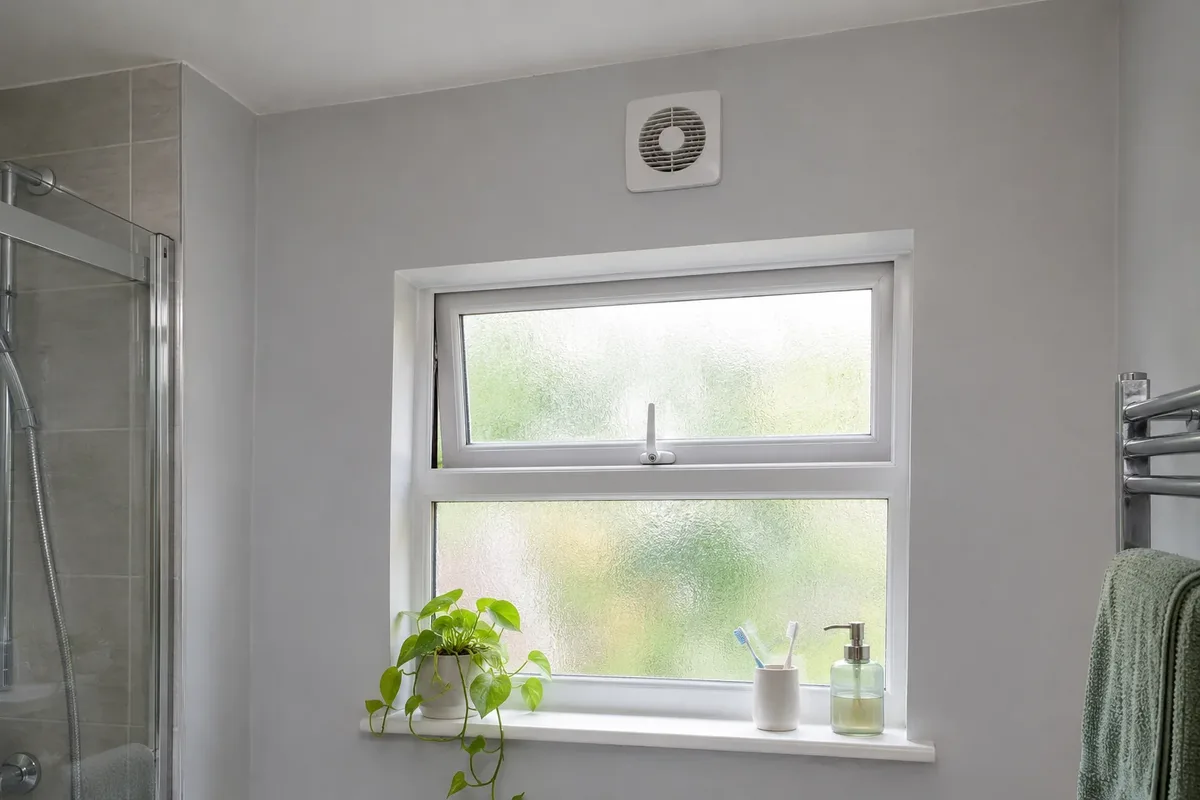
A fan only helps if it moves enough air and sends it outside. A weak or blocked fan, or one that vents into the roof space or a shared void, leaves the moisture in the building. A fan that is never switched on does nothing.
For new work, the Scottish Building Standards domestic technical handbook gives guidance of mechanical extraction of at least 15 litres per second for a bathroom or shower room on intermittent use, discharging directly to outside air. It is on the Scottish Government website. We tell you what applies to your bathroom, and whether a building warrant is likely.
Why Is a Fan Harder to Fit in a Flat?
Some tenement bathrooms sit away from an outside wall, which makes the duct longer. A duct that passes through a shared wall, a roof or the common parts of the building may involve your neighbours or the other owners. Talk it through early. Our neighbour guide explains how.
We look at the likely route at the home visit and tell you what is realistic.
Condensation still a problem?
Does Keeping the Bathroom Warm Help?
Warmer surfaces collect less water. Gentle, steady heat with the fan running works better than short bursts of heat. A heated towel rail can keep a bathroom a little warmer and dry the towels.
Heating costs money, so this is a balance. Cheap steps such as wiping and using the fan come first.
Which Finishes Cope Best?
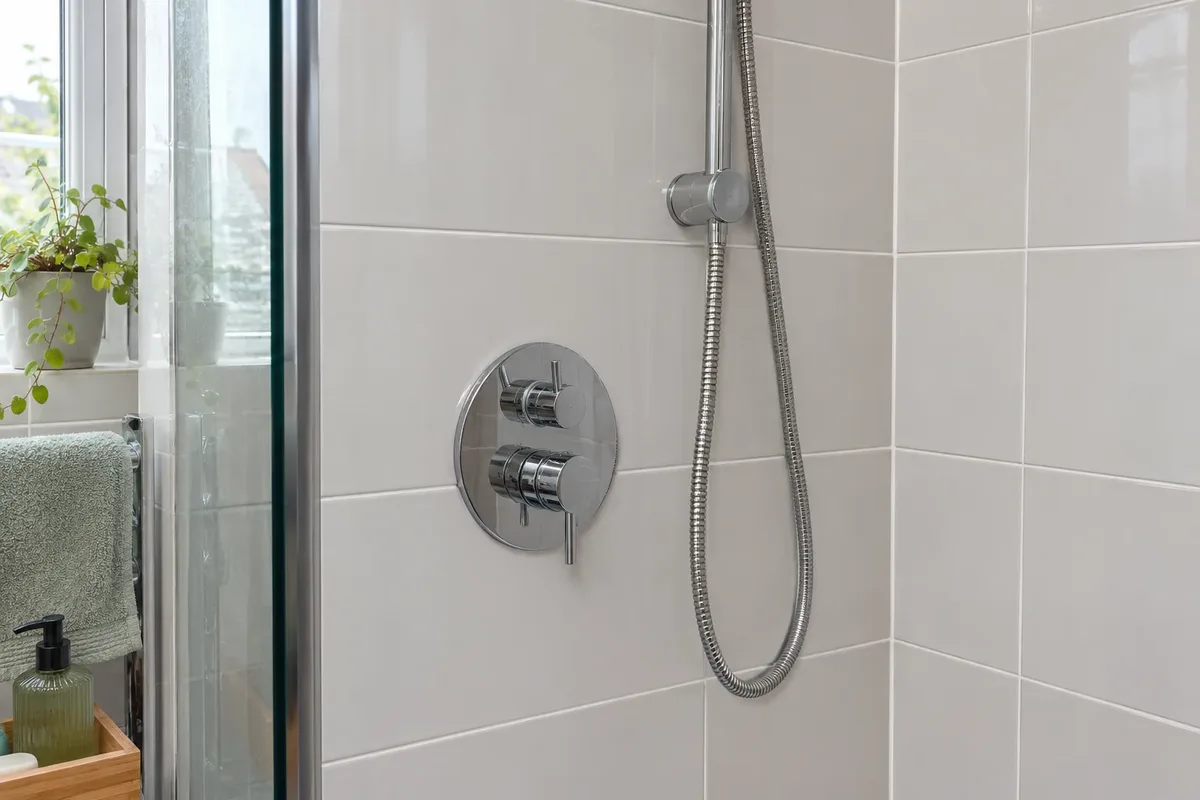
Choose surfaces that shrug off water and are easy to wipe. Tiles with sealed grout, or wet wall panels with few joints, suit a shower area. Paint made for bathrooms helps elsewhere. Our guide to wet wall panels or tiles explains upkeep.
Keep the sealant fresh. A cracked or gappy seal lets water behind the finish, and that is where trouble starts.
When Is It Not Condensation?
Not every damp patch is condensation. A leak from a pipe, a waste or the flat above can look similar. Damp that appears on a wall that is dry at other times, or near a pipe, is worth investigating.
- Damp that stays after you have ventilated and wiped.
- A stain that spreads from a pipe, a ceiling or a wall joint.
- Peeling plaster or a musty smell with no steam.
- A patch on the ceiling below another flat.
Our damp bathroom guide explains how to find the cause before refitting, and what to do after a leak covers the next steps.
How Do I Deal With the Mould I Can See?
Small patches of surface mould can be wiped off. Follow the instructions on the product you use, and ventilate while you work. If mould returns quickly or covers a large area, find the cause rather than just cleaning it again.
If you rent, tell your landlord about damp and mould in writing. If you are worried about anyone’s health, speak to your GP.
When Does a Refit Make Sense?
A refit helps when the cause is built in: no fan, a fan with no outside route, failed seals, a leaking waste or surfaces that cannot be kept dry. A new bathroom does not cure damp coming from elsewhere, which is why the cause comes first. We are not damp surveyors, so a specialist may need to look first.
If the cause is the room, we can plan the fix. Our tenement bathrooms page explains how we fit flats, and the bathroom renovation page covers the full refit. Our packages start from £4,699 for design, supply and fitting.
We cover all of Edinburgh and the surrounding areas. The phone line is open Monday to Friday, 9am to 5pm.