
Where Do I Start With Bathroom Storage?
Start by counting what you keep in there. Empty the cupboards and group everything: towels, toiletries, medicines, cleaning products, spare toilet rolls, hair dryers. You will quickly see which items need shelves, which need drawers and which could live elsewhere.
Then decide what has to be within arm’s reach and what can sit higher up or out of the room. Storage that fits what you actually own beats storage that looks tidy in a showroom.
Are Drawers Better Than Doors in a Small Vanity?
Often, yes. A drawer shows you everything at once, so nothing is lost at the back. Doors need space to swing open, and in a small room that can catch your knees or the toilet.
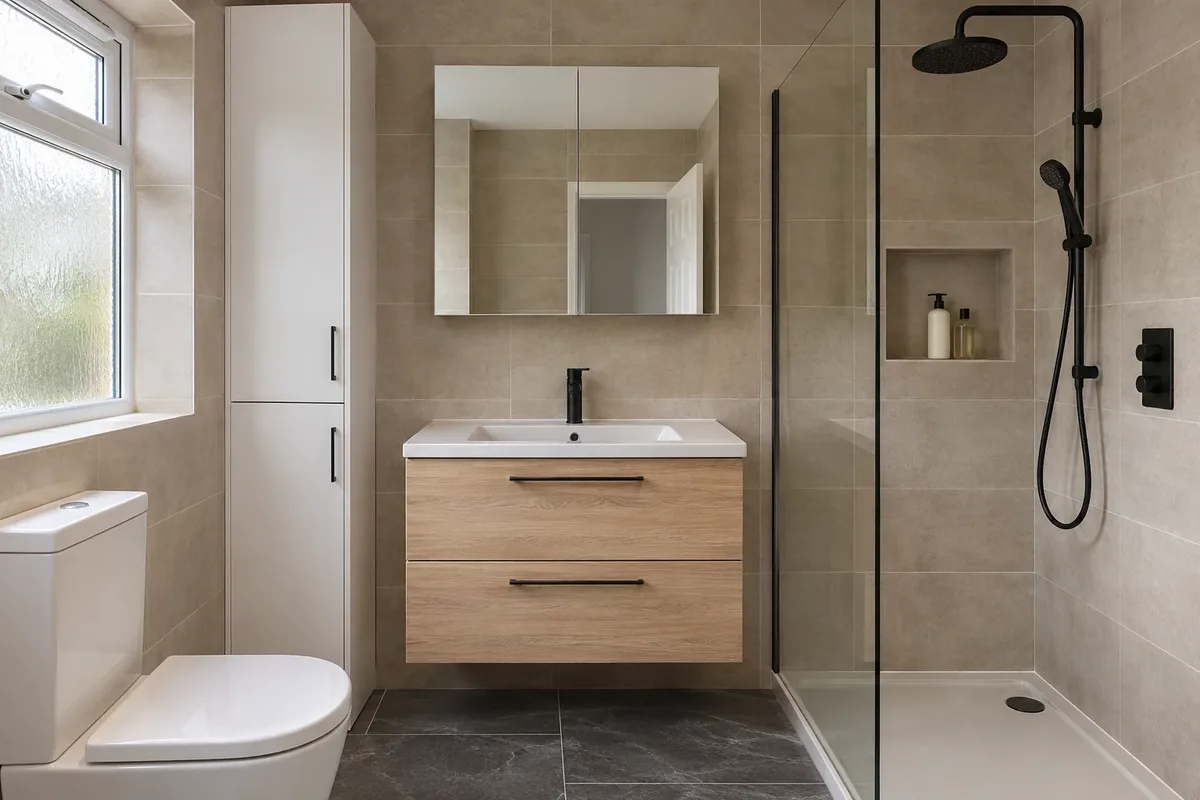
A vanity with a shallow basin and a drawer underneath gives you storage without losing floor. Some drawers have a cut-out to go round the waste pipe, which is worth asking about when you choose.
Why Add a Niche to the Shower Wall?
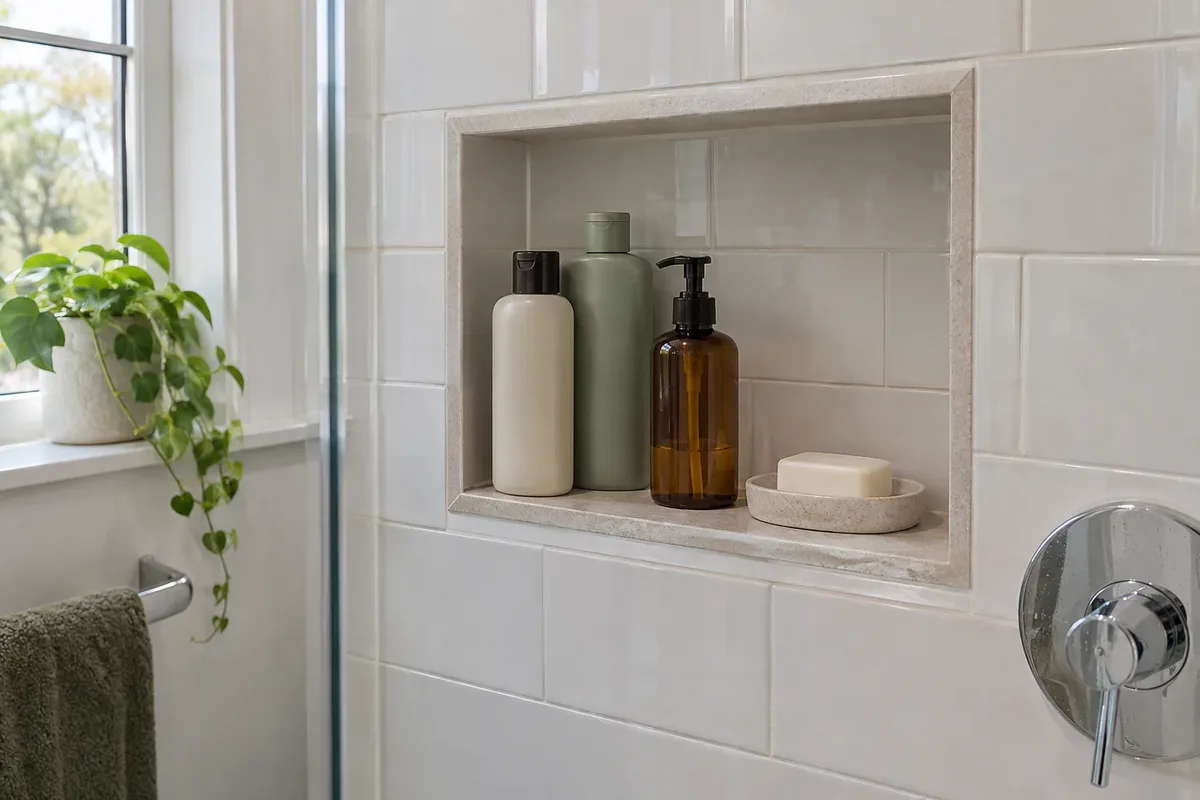
A niche is a recess built into the wall. It holds bottles and a soap dish where you can reach them, and keeps them off the floor and the bath edge. It also takes up no room in the bathroom itself.
A niche has to be planned before the wall is tiled, and waterproofed properly, so mention it early. Our guide to wet wall panels or tiles explains how the shower wall is built.
How Do I Use the Height of the Room?
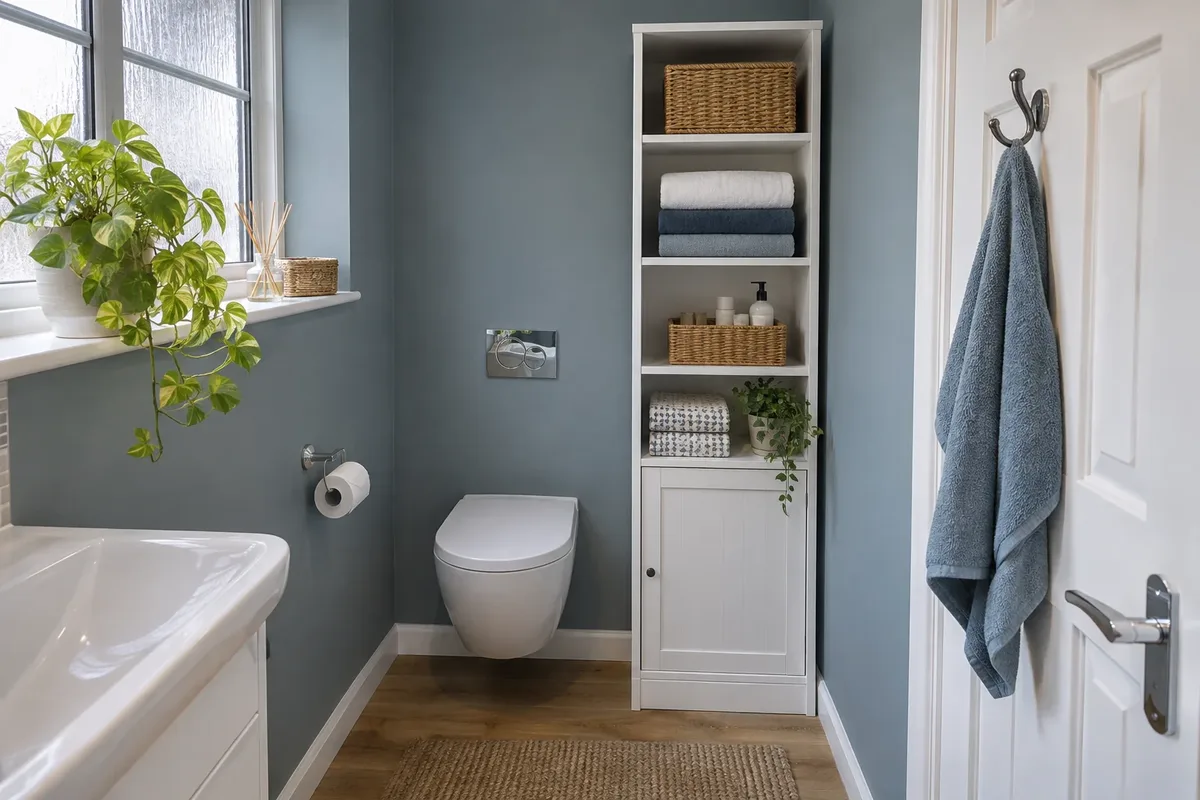
Go up. A tall, slim unit beside the toilet or basin takes little floor space and holds a lot. Open shelves above the toilet are a simple option, and a few baskets keep small items together.
Many Edinburgh tenement bathrooms have high ceilings, which gives you plenty of height. Our tenement bathroom ideas cover this in more detail.
Want storage planned into your bathroom?
Can a Mirror Give You Storage Too?
Yes. A mirror cabinet hides bottles and medicines behind a mirrored door, and takes the place of a plain mirror. A lit mirror adds light. A mirror with a shelf below is a middle route.
Our guide to LED bathroom mirrors explains what to look for. Whichever you pick, check that the door opens fully without hitting a tap or a wall.
Where Should the Towels Go?
Towels take more room than anything else. A heated towel rail is the obvious answer, and it warms the room too. Hooks on the back of the door and a shelf for spares make up the rest.
Keep rails and hooks out of the arc of the door and away from the shower screen. It is a common mistake, and a frustrating one.
Does a Wall-Hung Toilet Create Storage?
It can. A wall-hung toilet sits on a frame behind a short boxed-in wall. The top of that wall makes a useful ledge for a plant, a candle or a spare roll, and the floor underneath is clear, which makes the room look larger. Our bathroom layout guide explains where the toilet can go.
What About the Back of the Door and the Wall Space?
The back of the door is free storage. A pair of hooks holds dressing gowns and towels, and a slim over-door rack holds more. Check that the hooks do not hit the shower screen or the wall when the door opens.
Wall space above the toilet cistern is another spot people forget. A pair of shallow shelves or a narrow cabinet there takes nothing from the floor. Fix them into solid wall with the right fixings, because a shelf full of bottles is heavier than it looks.
Small baskets and trays help too. They keep similar things together, such as razors and toothpaste, and you can lift the whole tray down when you need it.
What Should I Avoid?
- Wall cabinets hung where you will bang your head.
- Deep units that leave only a narrow walkway.
- Doors that swing into the toilet, the bath or each other.
- Open shelves for things you would prefer to hide.
- Cabinets so deep that you cannot see or reach the back.
- Leaving storage until the end, when the tiles are done.
Why Plan Storage Before the Tiles?
A niche, a recessed shelf or a boxed-in toilet wall is part of the walls. They are easy to build in before tiling and awkward to add afterwards. The same goes for a power point behind a mirror cabinet.
So we look at storage at the home design visit, along with layout, light and the pipes and waste route. Our bathroom design page explains the visit.
What Is the Next Step?
We cover all of Edinburgh and the surrounding areas. We come to your home, measure the room and show you examples of vanities, mirrors and storage in your own light. Our small bathroom specialists page explains how we fit compact rooms.
Our packages start from £4,699 for design, supply and fitting, and you can see them on the prices and finance page. The phone line is open Monday to Friday, 9am to 5pm.