
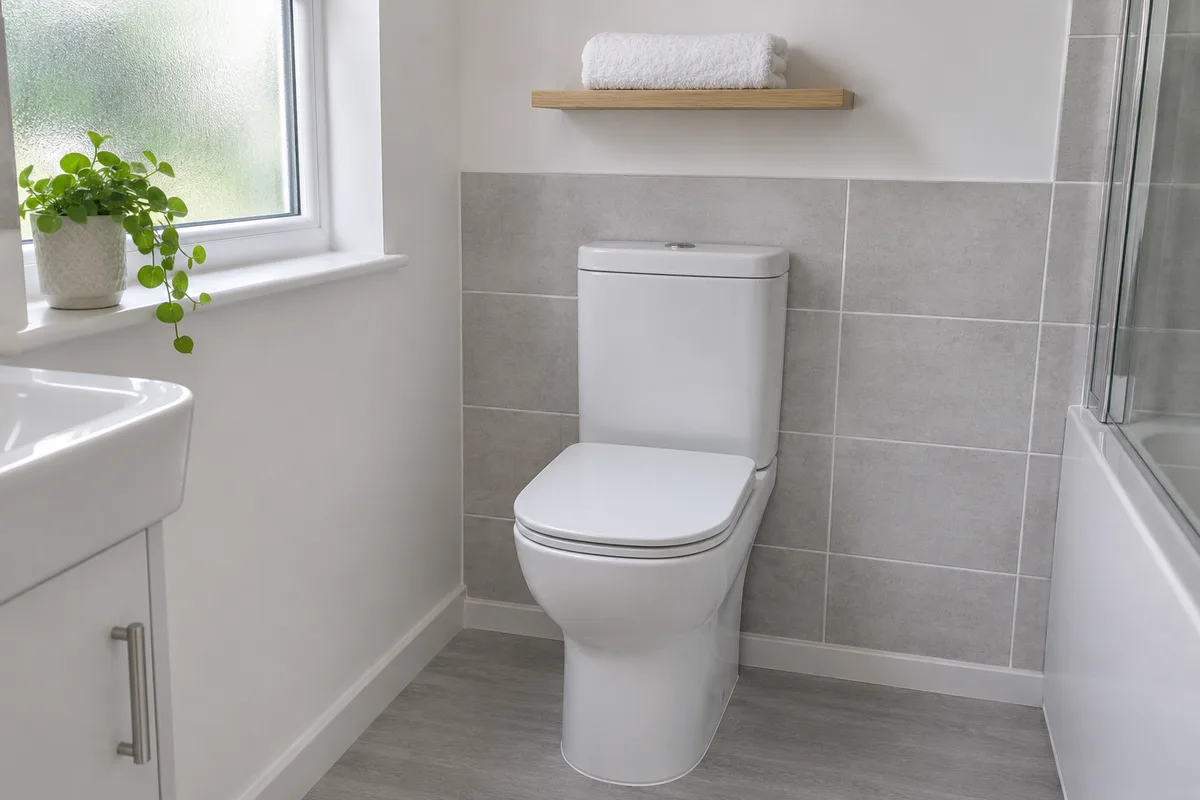
What Are the Three Main Types of Toilet?
Almost every toilet in a UK home falls into one of three groups. The difference is where the cistern sits and how the pan is fixed.
| Type | Where the cistern is | How the pan is fixed | Best for |
|---|---|---|---|
| Close-coupled | On the back of the pan, in view | Floor | Simple fitting and easy access |
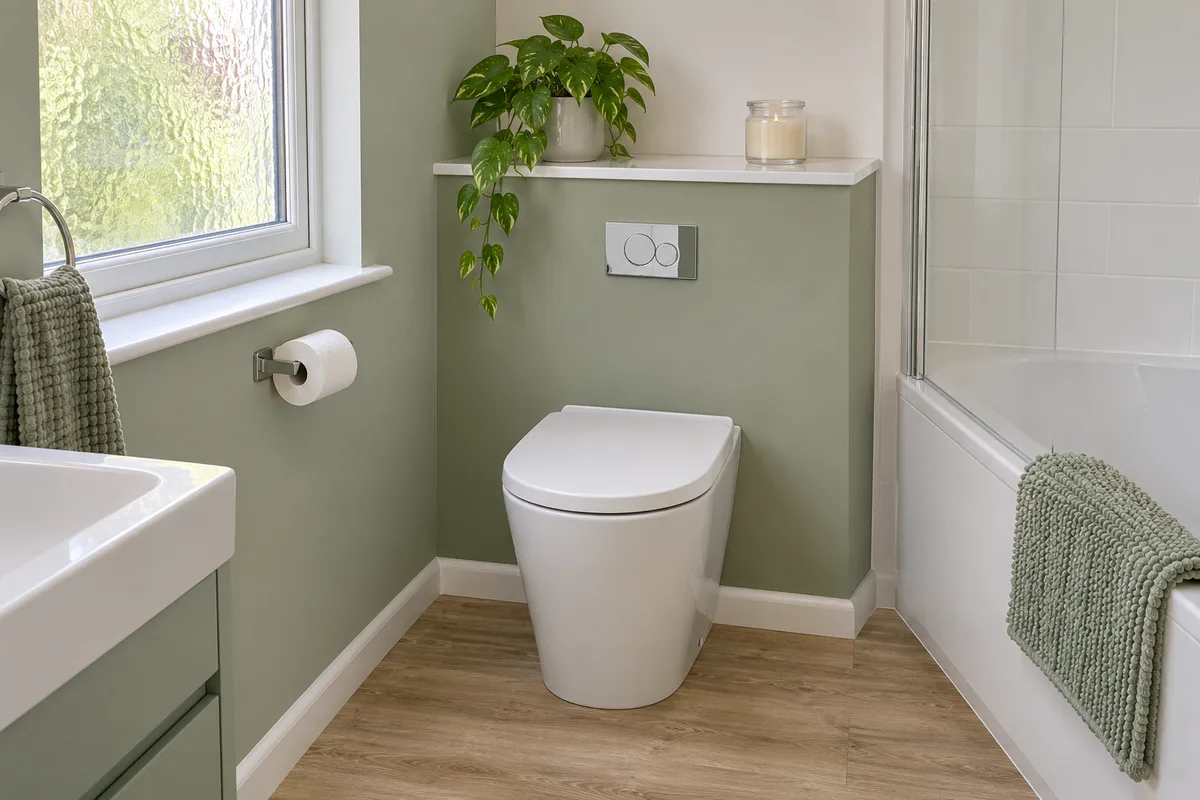
| Back-to-wall | Hidden in a boxed-in wall or furniture unit | Floor | A neat look and easy cleaning |
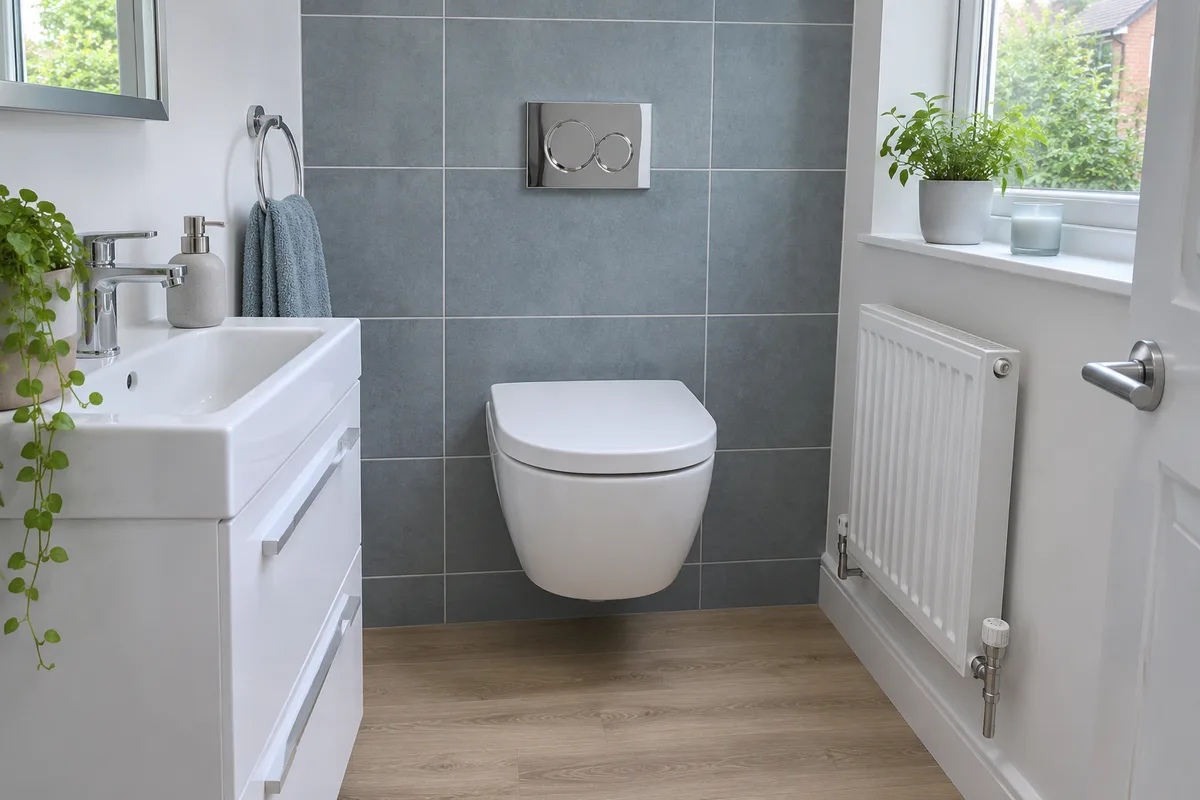
| Wall-hung | Hidden inside the wall on a frame | Wall frame, pan floats above the floor | Small rooms and the easiest floor to clean |
When Does a Close-Coupled Toilet Make Sense?
This is the traditional toilet, with the cistern sitting directly on the pan. It is the simplest type to fit, and the cistern is easy to get at if anything needs adjusting.
The trade-off is bulk. The cistern takes up wall space and gives you one more surface to dust. It suits a family bathroom where you want a straightforward fit and fewer parts hidden behind the wall.
What Is a Back-to-Wall Toilet?
The pan stands on the floor against the wall, and the cistern is hidden. Often the cistern sits in a boxed-in section or inside a furniture unit, which also gives you a ledge for a plant or a few bottles.
- Looks tidier. There are no visible cistern and pipes, and the lines are cleaner.
- Easier to wipe. The pan sits snug to the wall, with no gap behind it to clean.
- Storage. The top of the boxing-in gives you a handy shelf.
- Needs space behind the wall. The cistern is shallow, but it still needs a boxed-in section or a stud wall to sit in.
In many Edinburgh flats the soil pipe sits right behind the toilet, so this is often a good way to hide it neatly.
Is a Wall-Hung Toilet Worth It?
A wall-hung pan is fixed to a steel frame inside the wall, so it floats above the floor. That frame carries the cistern too, and the flush plate sits on the wall above.
The pan also sits a little closer to the wall than a floor-standing one, which can win you valuable room in a narrow bathroom. You can run a mop right underneath, which is why many people choose this type.
The cost is in the parts. You pay for the frame and the concealed cistern as well as the pan, and the wall needs the right preparation.
Not sure which toilet fits your room?
What Does Your Wall Need to Be?
This is the question that decides most choices. A floor-standing toilet puts its weight through the floor, so the wall does not matter much. A wall-hung toilet is different, because the frame has to be anchored to the structure and not simply screwed to plasterboard.
- Solid masonry wall: usually well suited to a frame, with the right fixings.
- Stud wall: can work if it is built for the frame and strengthened where needed.
- Old tenement walls: thick, but not always flat, so we check them before we promise a flush finish.
- Pipes and drains: where the soil pipe runs affects every type, and can limit where the toilet goes.
We check the wall at the home design visit, so you know before ordering anything whether the type you like will fit.
Which Is Easiest to Live With Every Day?
For cleaning, a wall-hung toilet usually wins, because the floor underneath is clear. A back-to-wall is next, as there is no gap behind the pan. A close-coupled has the most corners, but it is also the one that is easiest to reach if you need to adjust anything.
Seat comfort and height matter too. Many people prefer a taller pan, and some wall-hung frames let the pan be fixed at the height that suits you. Mention this at the visit, particularly if anyone at home finds standing up difficult. Our bathroom layout guide covers the clearances we plan around.
What Works Best in a Small Bathroom?
In a small room, a wall-hung or back-to-wall toilet usually gives you the best result. Both look lighter, and the visible floor makes the room feel larger. If you are limited on width, ask us about compact pans and shallow cisterns.
Our small bathroom specialists page shows how we plan tight rooms, and our small bathroom ideas cover the rest of the room.
How Do I Choose?
Start with the room and the wall, and then think about cleaning and looks.
- Want the simplest fit and easy access? Choose close-coupled.
- Want a tidy look without major wall work? Choose back-to-wall.
- Want the most open floor and have a suitable wall? Choose wall-hung.
- Unsure about the wall? Ask for it to be checked first.
The toilet is one part of a full refit. Our bathroom renovation service includes design, supply and fitting, and our packages start from £4,699. If you are adding a toilet elsewhere in the house, see our guide to cloakroom and downstairs toilet costs.